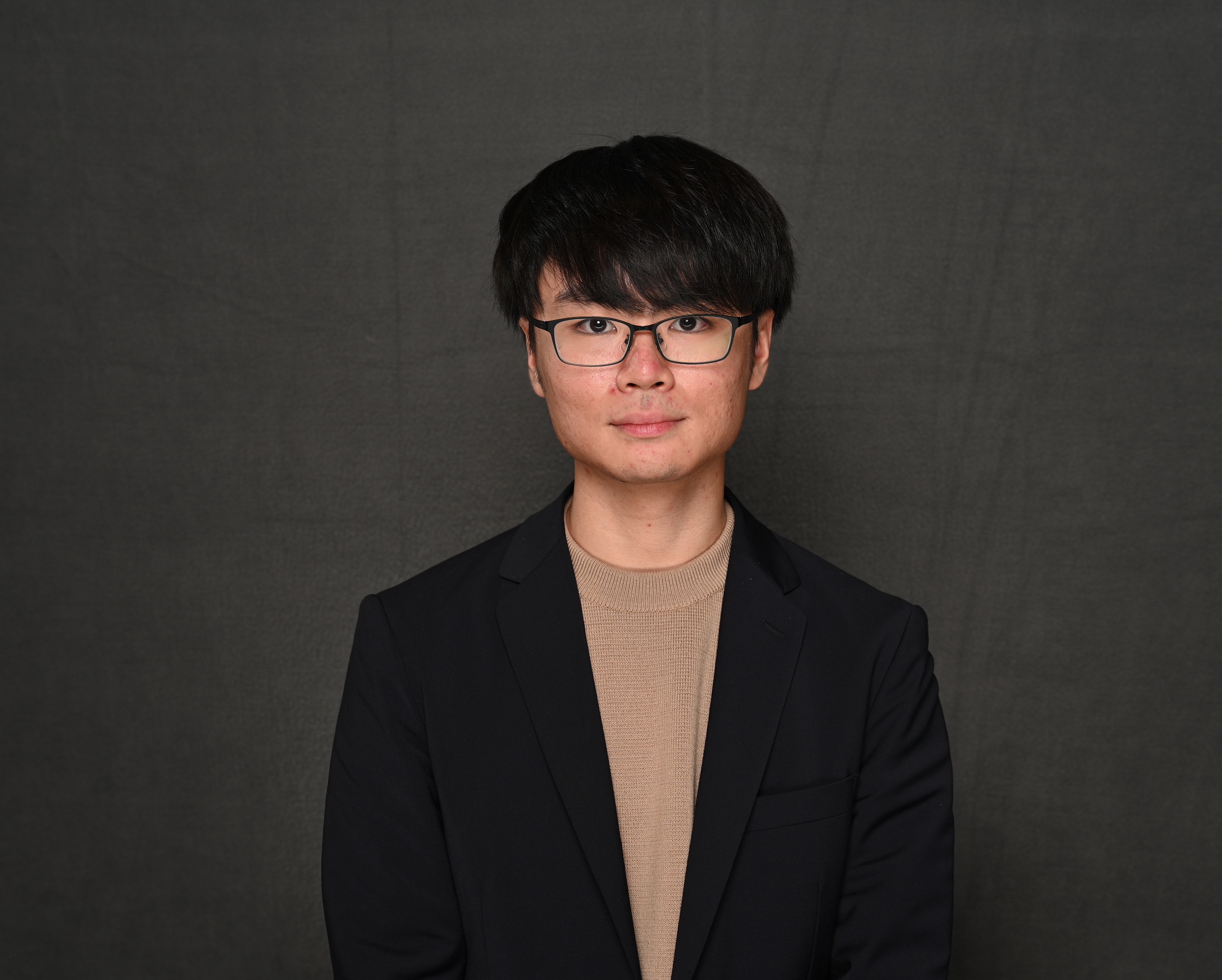
About
I am a doctoral student advised by Dr. Shalmali Joshi at the Department of Biomedical Informatics at Columbia University.
I am interested in developing methods to enhance AI reliability and robustness in data-scarce environments, with a focus on handling uncertainty and missing data. My current research uses principles from causality, Bayesian inference, and reinforcement learning to guide cost-efficient data acquisition under uncertainty.
Selected Works
Conference Papers
Positive-Unlabeled Preference Optimization For Chest X-ray Report Generation
Yuta Kobayashi, Pradyun Ramesh, Muhammad Ahmed Chaudhry, Vincent Jeanselme, Judy Wawira Gichoya, Sanmi Koyejo, Kathleen Capaccione, Shalmali Joshi
Advances in Neural Information Processing Systems (NeurIPS), 2026
Retrospective radiology reports omit findings, and models trained on them learn to under-report. We recast the DPO objective as positive-unlabeled learning so that omission noise no longer corrupts the preference signal.
One Loss to Rule Them All: Marked Time-to-Event for Structured EHR Foundation Models
Zilin Jing, Vincent Jeanselme, Yuta Kobayashi, Simon A. Lee, Chao Pang, Aparajita Kashyap, Yanwei Li, Xinzhuo Jiang, Shalmali Joshi
Advances in Neural Information Processing Systems (NeurIPS), 2026
We propose ORA, a marked time-to-event pre-training objective that jointly models event timing and the associated measurements, yielding more generalizable EHR representations than next-token prediction.
Learning-To-Measure: In-context Active Feature Acquisition
Yuta Kobayashi, Zilin Jing, Jiayu Yao, Hongseok Namkoong, Shalmali Joshi
International Conference on Machine Learning (ICML), 2026
We introduce Learning-to-Measure (L2M), a meta-learning framework that pairs reliable uncertainty quantification over unseen tasks with an uncertainty-guided acquisition agent, enabling in-context active feature acquisition without per-task retraining.
Preprints and Manuscripts Under Review
Evaluation of Active Feature Acquisition Policies with Tabular Foundation Models
Yuta Kobayashi, Divyam Madaan, Shalmali Joshi
Under review, 2026
Scoring feature acquisitions by the total predictive entropy of a prior-data fitted network introduces an epistemic bias that penalizes sparsely observed features. We target the posterior expected (aleatoric) entropy instead, which reduces value estimation bias and yields credible intervals with strong empirical coverage.